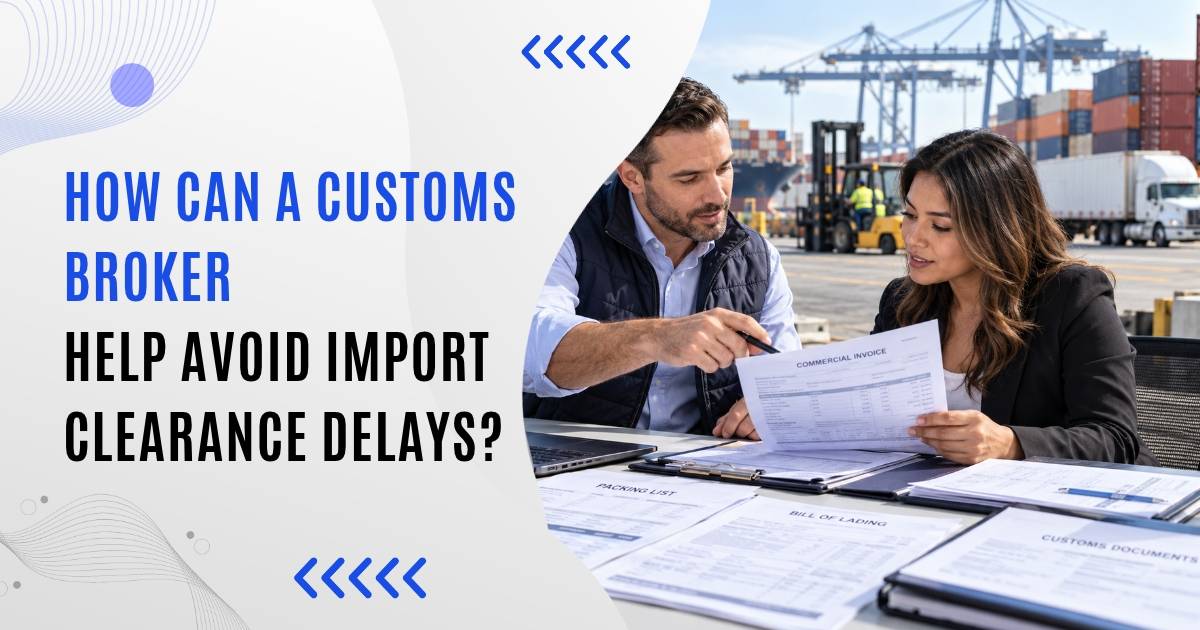
A shipment may reach port but still be unable to move. Missing documents, incorrect tariff details, and late filings can create import clearance delays that affect storage expenses and customer schedules. A customs broker helps importers prepare before cargo arrives rather than reacting only after a hold appears. For businesses using Customs brokerage services in California, early document review and coordinated communication are especially useful around the busy Los Angeles and Long Beach gateways. The goal is fewer errors, not guaranteed release.
Also Read: Why Is Your Shipment Held at Customs in California? Common Causes and Fastest Next Steps
Table of Contents
Why Import Clearance Delays Happen Before Delivery
Clearance requires more than an invoice. Authorities review shipment information, tariff classification, valuation, admissibility, and other applicable requirements. Import clearance delays may result when information is incomplete or requires correction. Inspections and agency reviews can also occur even when paperwork is accurate. A Customs broker in Los Angeles CA can help an importer identify documentation gaps before cargo reaches the terminal. That protects scheduled drayage and warehouse appointments.
7 Ways a Customs Broker Helps Prevent Import Clearance Delays
1. Reviews Commercial Documents Before Arrival
Invoices, packing lists, transport records, and importer information need to describe the same shipment. A broker can check product descriptions, quantities, declared values, seller information, and consignee details for inconsistencies. Catching mismatches early reduces avoidable import clearance delays arising from missing or conflicting documentation. Businesses choosing Customs brokerage services in California should ask when documents must be submitted for review. Waiting until containers become available may leave too little time to resolve supplier questions or obtain corrected paperwork.
2. Checks Tariff Classification and Declared Value
Every imported product needs appropriate Harmonized Tariff Schedule classification. The correct classification affects duty assessment and may determine whether other requirements apply. Brokers can review product specifications and identify questions for the importer before filing. Unclear descriptions or unsupported values can contribute to import clearance delays. Companies comparing Customs brokers in California should ask how classification reviews are performed, especially for products with multiple materials or uses. Importers must provide accurate product records.
3. Coordinates Time-Sensitive Ocean Import Filings
For applicable vessel shipments, Importer Security Filing information generally must reach CBP no later than 24 hours before cargo is loaded aboard the U.S.-bound vessel. Missing or inaccurate data can trigger compliance problems. Coordinating these filings early helps reduce avoidable import clearance delays and related complications. Businesses comparing Los Angeles customs brokers and freight forwarders should clarify who provides origin-side shipment data, who files the ISF, and who confirms acceptance. Their responsibilities differ.
4. Identifies Other Government Agency Requirements
Some imported products are subject to requirements administered by agencies such as the FDA, USDA, EPA, or other regulators. A customs broker can flag potential permits, supporting records, or product-specific requirements for review. Addressing them early may reduce import clearance delays, although only the relevant government agency decides whether its conditions are satisfied. Importers using Customs brokerage services in California should share complete product details, including intended use, material composition, and manufacturing information when relevant. Vague descriptions obscure applicable rules.
5. Organizes Authorization, Bonds, and Filing Readiness
A licensed customs broker generally needs appropriate authorization to conduct customs business for an importer. Bond arrangements, importer identifiers, and account information also deserve early attention. Verifying these details before the first shipment can prevent administrative import clearance delays during entry preparation. When evaluating 3PL brokerage services, confirm that customs entries are handled by properly licensed brokers. Freight coordination and customs brokerage are different functions, even when a logistics provider helps manage both.
6. Tracks Entry Status and Responds to Questions
Submitting an entry is not the same as receiving release. Brokers can monitor filing acknowledgments, identify requests for information, and communicate with CBP through permitted channels. Prompt, accurate responses may reduce avoidable import clearance delays when additional information is needed. Importers seeking Customs brokerage services in California should agree on status updates and escalation contacts. Ask who communicates a document rejection, government hold, inspection request, or release confirmation, and how quickly operations staff will be notified.
7. Aligns Customs Release With Freight Delivery
A shipment can be cleared by customs yet still face terminal, carrier, appointment, or equipment restrictions. Brokers and logistics coordinators should share status changes so trucking is not dispatched against an unconfirmed pickup. Better coordination reduces avoidable handoff problems that sometimes accompany import clearance delays. To Unify freight and customs brokerage workflows, connect those managing filings, ocean transportation, port pickup, and receiving appointments. Coordination does not authorize unlicensed customs work.
Documents to Prepare Before the Shipment Arrives
A broker can advise what is required for the particular commodity and entry. As a starting point, importers should assemble:
- Commercial invoices with clear descriptions and values
- Packing lists, quantities, and container details
- Bills of lading or airway bills and shipment references
- Importer identification and authorized contact details
- Product specifications, origin information, and relevant permits
- Any shipment-specific records requested by the broker or agency
How to Choose a Broker for Southern California Imports
Look beyond a promise of fast clearance. Ask about licensing, experience with your products, document-review processes, communication, and coordination with carriers. Comparing Customs brokerage services in California is most useful when the providers explain precisely who owns each filing and follow-up.
For businesses sourcing Los Angeles customs brokers and freight forwarders, request a responsibility map covering supplier paperwork, ocean bookings, ISF filing, customs entry, terminal release, and inland transportation. Confirm whether different firms will handle different stages.
A Customs broker in Los Angeles CA should explain who reports changing release statuses and who handles urgent requests from CBP. Those responsibilities matter when a carrier changes its arrival schedule.
For Customs brokerage services in California, request a written timeline for document review and a clear contact for urgent corrections before vessel arrival.
Get Customs and Freight Support From 3PL Platinum
3PL Platinum’s customs brokerage service lists import clearance, HTS classification, ISF filing, duty and tariff guidance, and compliance support for Los Angeles and Long Beach shipments. The company also offers freight coordination services to support onward transportation and delivery. Customs brokerage services in California work best when importers share accurate records early and report shipment changes promptly. Such cooperation can reduce preventable import clearance delays, although government agencies control release decisions. Call 3PL Platinum at (909) 315-6288 to discuss cargo, documentation, and arrival schedules.
For more insights on import clearance and freight coordination, explore the 3PL Platinum logistics blog.
Frequently Asked Questions
Is a customs broker required for every US import?
No. Importers are not generally required to hire a customs broker. Many businesses choose licensed brokers for assistance with filings, documentation, and compliance procedures.
Can a broker guarantee that my cargo clears immediately?
No. Government inspections, agency reviews, and shipment-specific issues can affect release. A broker can prepare and respond, but does not control CBP’s final decision.
When should I contact a customs broker?
Ideally, before the shipment departs the origin country. Early contact allows time to review documents, responsibilities, and applicable filing deadlines.
Does customs release mean my container is ready for pickup?
Not always. A carrier release, terminal availability, and valid pickup appointment may also be needed. Confirm each requirement before dispatching a truck.