Table of Contents
Fast-moving freight cannot afford unnecessary stops. Every extra storage, handling, and scheduling step can slow a shipment before it reaches the next destination. That is why many shippers compare cross-docking vs warehousing when they need to keep goods moving through Southern California. For companies handling frequent inbound and outbound loads, Cross Docking Services in California can reduce storage time when products already have a clear next destination and outbound transportation is ready.
What Is Cross-Docking?
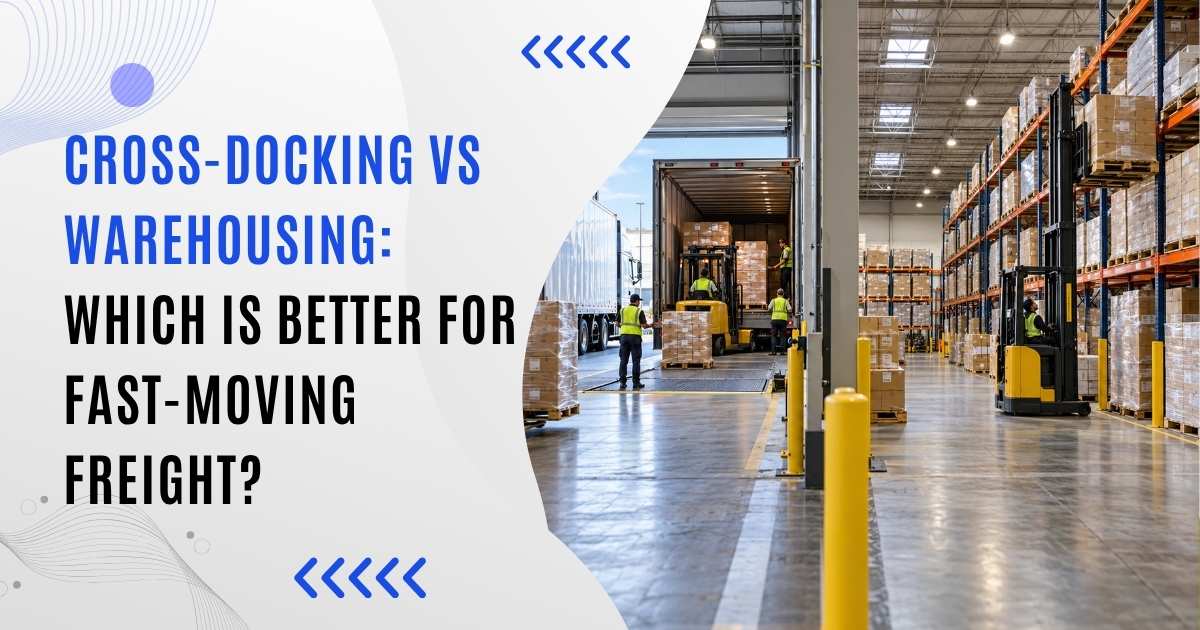
Cross-docking moves freight from inbound transportation toward outbound transportation with little or no long-term storage. Goods may still be received, checked, sorted, staged, consolidated, or relabeled before leaving. Businesses using Cross Docking Services in Los Angeles often choose this model when inbound freight already has a known destination and the outbound carrier can be coordinated closely with arrival times. Cross-docking is commonly used to move incoming freight toward outbound transportation while reducing unnecessary storage between the two movements.
Read More: Why Is Your Shipment Held at Customs in California? Common Causes and Fastest Next Steps
What Is Warehousing?
Warehousing stores inventory before dispatch. It gives businesses space to hold safety stock, seasonal goods, slower-moving products, or freight awaiting orders and distribution instructions. A 3pl service provider in California may combine storage with receiving, inventory tracking, retrieval, fulfillment, packing, and transportation support, giving businesses more control over inventory that cannot move immediately. When comparing cross-docking vs warehousing, storage becomes useful when the next destination is not confirmed, demand is uncertain, or stock must remain available for future orders.
When Cross-Docking Is Better for Fast-Moving Freight
Cross-docking usually fits freight already allocated to customers, stores, distribution points, or another carrier. The goal is to prevent inventory from sitting longer than necessary. Companies evaluating Cross-dock services California should confirm that inbound timing, outbound capacity, freight information, dock access, and labor are aligned before choosing the faster workflow. In cross-docking vs warehousing, cross-docking can be stronger when freight arrives palletized, labeled correctly, and ready for quick redistribution. It can also help consolidate compatible inbound shipments before outbound dispatch.
When Warehousing Is the Better Choice
Speed matters, but not every shipment should move immediately. Some inventory needs flexibility or a controlled holding point before its next destination becomes clear. Businesses considering Cross Docking services in Long Beach should not choose cross-docking simply because freight entered through a nearby port. If inventory needs storage, inspection, order allocation, or delayed distribution, warehousing may be more practical. The cross-docking vs warehousing decision changes when demand is unpredictable. A warehouse gives a business time to hold products and release them as customers, retail locations, or fulfillment orders require them.
Cross-Docking vs Warehousing: Five Factors That Decide the Better Option
1. Is the Next Destination Already Known?
If the destination, quantity, and outbound carrier are confirmed, cross-docking can remove unnecessary storage. If freight must wait for orders or routing instructions, a warehouse usually makes more sense. For time-sensitive freight, Cross Docking Services in California can support direct movement when arrival and departure schedules are coordinated closely.
2. How Long Does the Freight Need to Stay?
In cross-docking vs warehousing, the time requirement often makes the choice clear. Freight expected to move quickly should not automatically enter storage, while inventory that needs time should not be forced through a rapid transfer. A shipment that may remain on site for days or weeks usually needs a different workflow from freight scheduled to leave shortly after arrival.
3. Does the Freight Need Processing?
Some loads need sorting, pallet rebuilding, labeling, consolidation, or quality checks. These tasks can still fit a cross-dock workflow when they are limited and the outbound schedule allows enough time. A Cross-Docking services in LA & Long Beach strategy should account for the actual work required instead of assuming every shipment can move directly from one trailer to another.
4. Are Inbound and Outbound Schedules Synchronized?
Cross-docking depends heavily on timing. If an outbound trailer is not ready, freight may need staging space and the speed advantage can shrink. A provider offering Cross Docking Services in Los Angeles should coordinate inbound arrival, receiving, staging, and outbound dispatch so the transfer does not create avoidable waiting.
5. Do You Need Inventory Flexibility?
Warehousing provides more flexibility when demand changes. Inventory can remain available while orders, routes, or replenishment needs develop. In cross-docking vs warehousing, cross-docking favors predictable movement, while warehousing favors flexibility. Fast-moving freight can use either method depending on what matters most at that stage.
Can You Combine Cross-Docking and Warehousing?
Yes. A shipment can send immediately allocated freight through cross-docking while moving reserve inventory into storage. For businesses with changing volumes, Cross Docking Services in California can become one part of a wider distribution strategy rather than replacing warehousing completely. This approach can help businesses avoid storing freight that is ready to leave while still maintaining space for inventory that must wait.
How 3PL Platinum Supports Both Workflows
3PL Platinum describes its cross-docking process as receiving, sorting and staging, load consolidation, outbound dispatch, quality checks, and scheduling coordination. Its warehouse service includes pallet and floor storage, seasonal storage, dock access, and inventory visibility. For Southern California freight, Cross Docking Services in Los Angeles may fit loads that can move quickly, while warehousing can support shipments that need controlled storage before release.
For a cross-docking vs warehousing comparison, the company states that its cross-docking service covers Los Angeles, Long Beach, Ontario, Torrance, Fontana, and Riverside. Its warehouse offering is based in Ontario and supports short-term and long-term storage. In cross-docking vs warehousing, having access to both workflows can help a shipper match the handling method to the freight instead of forcing every shipment into the same process.
Conclusion
There is no single winner in cross-docking vs warehousing. Cross-docking is usually better when freight has a confirmed next destination, synchronized transportation, and little reason to remain in storage. Warehousing is better when inventory needs time, flexibility, organization, or later order fulfillment. Cross Docking Services in California can support the faster path when the load is already prepared for continued movement. The best cross-docking vs warehousing decision comes from mapping the full shipment path. Review dwell time, destination readiness, labor, processing needs, outbound capacity, and storage requirements before selecting the workflow.
Frequently Asked Questions
Is Cross-Docking Always Faster Than Warehousing?
No. Cross-docking can reduce storage time when inbound and outbound transportation are coordinated, but delays can remove that advantage. Cross Docking Services in Los Angeles work best when the next movement is planned and freight can pass through with limited waiting.
When Should Fast-Moving Freight Still Use a Warehouse?
Fast-moving freight may still need warehousing when the destination is uncertain, orders are not allocated, or inventory must be held for later distribution. In cross-docking vs warehousing, storage provides more control when the shipment cannot move immediately.
Can Cross-Docking Work for Freight Arriving Near the Ports?
Yes, when the shipment is suitable and outbound transportation is ready. Cross Docking Services in California can help move port-related freight toward another carrier, destination, or distribution point without unnecessary long-term storage.
Can a Business Use Both Methods?
Yes. A hybrid model can move committed freight quickly while storing reserve or unallocated inventory. Cross-docking vs warehousing does not always require an either-or decision because different portions of the same inventory can follow different paths.
How Do I Decide Which Option Is Right for My Shipment?
Start with the shipment timeline. Check whether the destination is confirmed, how long freight must remain on site, what handling it needs, and whether outbound capacity is ready. If speed and minimal storage are the priorities, Cross Docking Services in California may provide the more direct workflow.