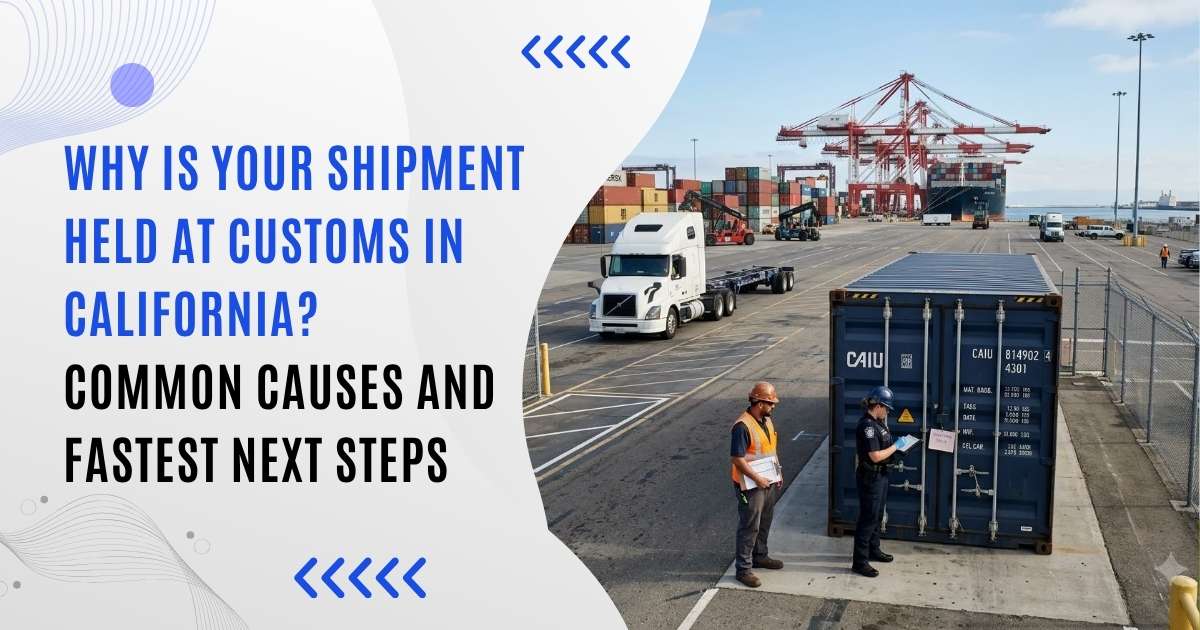
A shipment held at customs can interrupt a planned import. Causes include missing paperwork, unpaid duties, examinations, admissibility concerns, or inconsistent shipment information. The fastest response starts by identifying the exact hold. Importers using Customs brokerage services in California should organize invoices, product descriptions, values, classifications, and importer details before arrival. Preparation cannot prevent every examination, but it can reduce documentation delays.
Also Read: Customs Clearance Checklist Los Angeles: 7 Easy Steps for Importers
Table of Contents
What Does a Shipment Held at Customs Mean?
A shipment held at customs has not received release to continue. A hold does not automatically mean seizure. CBP may need information, payment, review, or an examination before release. Businesses working with a Customs broker in Los Angeles CA should ask for the hold status, agency, requested documents, and responsible party. Those details are more useful than a generic update.
6 Common Reasons a Shipment Held at Customs Gets Delayed
1. Incomplete or Incorrect Documentation
One common reason for a shipment held at customs is inaccurate paperwork. CBP identifies missing documents, incorrect values, missing forms, and other errors as possible causes. Commercial invoices also need adequate descriptions, quantities, values, and required information. Companies using Customs brokerage services in California should provide accurate invoices, bills of lading, importer details, and supporting records early. Correcting documents after a hold can take longer than validating them beforehand.
2. Classification, Value, or Declaration Questions
CBP uses shipment data to determine duties, admissibility, and compliance. A shipment held at customs may need review when value, origin, classification, or other entry data cannot be resolved. Importers comparing Los Angeles customs brokers and freight forwarders should clarify who handles classification, filing, transport documents, and follow-up. Clear ownership prevents requests being passed between providers.
3. Duties or Other Required Amounts Are Outstanding
A shipment held at customs may remain unreleased when duties or required amounts are outstanding. CBP notes that duties may need payment before goods are released. Businesses working with Customs brokers in California should confirm who calculates duties, arranges payment, and verifies the next status. Payment may not resolve a separate documentation or examination hold.
4. CBP Selects the Cargo for Examination
An examination can explain a shipment held at customs. CBP may review documents or require a physical exam. An intensive exam can require transfer to a Centralized Examination Station, and the hold remains until CBP removes it. A provider offering Customs brokerage services in California can help organize documents and responses, but no broker can guarantee that CBP will skip an examination or release cargo by a specific time.
5. Restricted or Agency-Regulated Goods
A shipment held at customs may involve admissibility concerns. CBP identifies restricted or prohibited goods, irregular declarations, and forced-labor-related Withhold Release Orders among possible detention reasons. Other agencies may regulate certain products. For a Customs broker in Los Angeles CA, the first question is which requirement or agency prevents release. A documentation issue may need a different response from an admissibility review.
6. Manifest Information Needs Review
A manifest hold can occur when CBP needs to verify arriving cargo information or requests supporting documents. A shipment held at customs for manifest review requires attention to the requested information rather than simply waiting. Importers using Customs brokerage services in California should keep shipment references and supporting records easy to retrieve so requested information can be supplied promptly.
5 Fastest Next Steps for a Shipment Held at Customs
1. Confirm Who Actually Has the Freight
Verify whether the cargo is with the carrier, terminal, examination facility, postal system, or elsewhere. CBP advises contacting the seller or carrier because customs clearance does not always mean CBP physically possesses the cargo.
2. Identify the Exact Hold Reason
Ask for the precise hold, current entry status, requested documents, responsible agency, and required action. A shipment held at customs for paperwork needs a different response from one selected for examination. Businesses working with Los Angeles customs brokers and freight forwarders should make sure one party owns the follow-up. Multiple providers can create delays when responsibility is unclear.
3. Gather and Check the Requested Documents
Prepare accurate records such as the commercial invoice, packing list, bill of lading or airway bill, product details, and importer identification. Check values, descriptions, quantities, and parties before submission.
4. Respond Quickly Without Guessing
Speed matters, but inaccurate corrections can create more questions. When a shipment held at customs requires new information, respond to the actual request and record what was submitted and when. Companies using Customs brokers in California should confirm whether additional information is outstanding after the response is filed instead of assuming submission means release.
5. Monitor Release and Downstream Deadlines
Continue tracking the entry after documents or payments are submitted. Terminal storage, equipment time, delivery appointments, and other deadlines can continue while the customs issue is being resolved. Businesses relying on Customs brokerage services in California should coordinate customs status with the next logistics step so drayage, receiving, or delivery plans can adjust when release occurs.
When a Customs Broker Can Help
CBP says importers are not legally required to hire a broker, but licensed customs brokers can conduct CBP business on their behalf and assist with paperwork and bonds. Importers remain responsible for compliance. 3PL Platinum’s customs brokerage page lists import clearance, export documentation, HTS classification, duty and tariff guidance, ISF filing, and compliance support for freight moving through Los Angeles and Long Beach.
Conclusion: Find the Reason Before Chasing the Release
A shipment held at customs needs a specific diagnosis. Missing documents, duties, manifest questions, examinations, and admissibility issues require different responses. Confirm the hold, identify who owns the next action, provide accurate information, and keep monitoring. The U.S. Customs and Border Protection guidance on detained shipments can help importers understand common reasons cargo may not be released. The goal is not to promise an instant release. It is to remove avoidable uncertainty and respond correctly to the issue preventing clearance.
Frequently Asked Questions
How long can a customs hold last?
There is no single timeline for every shipment held at customs. Duration depends on the reason, documents required, examination status, agency involvement, and response time. An intensive exam remains on hold until CBP removes it.
Who should I contact first when my shipment is held?
A Customs broker in Los Angeles CA can help review entry issues, while the carrier or party that issued the status can confirm the cargo’s location. The right first contact depends on who controls the next action.
Does a customs hold mean my goods were seized?
No. A shipment held at customs can be under document review or examination without being seized. A hold means release has not occurred; the reason determines what action is needed.
Can a customs broker guarantee faster release?
No. Customs brokerage services in California can support filings, classification, documentation, communication, and responses, but government agencies control their own reviews and release decisions. Avoid relying on guaranteed government-release timelines.
What is the best way to prevent the same problem on future imports?
Review the cause and improve the process before the next shipment. Standardize document checks, clarify filing responsibilities, verify product and importer information, and prepare required records before arrival. For recurring imports, Customs brokerage services in California can support a more consistent pre-arrival workflow.