
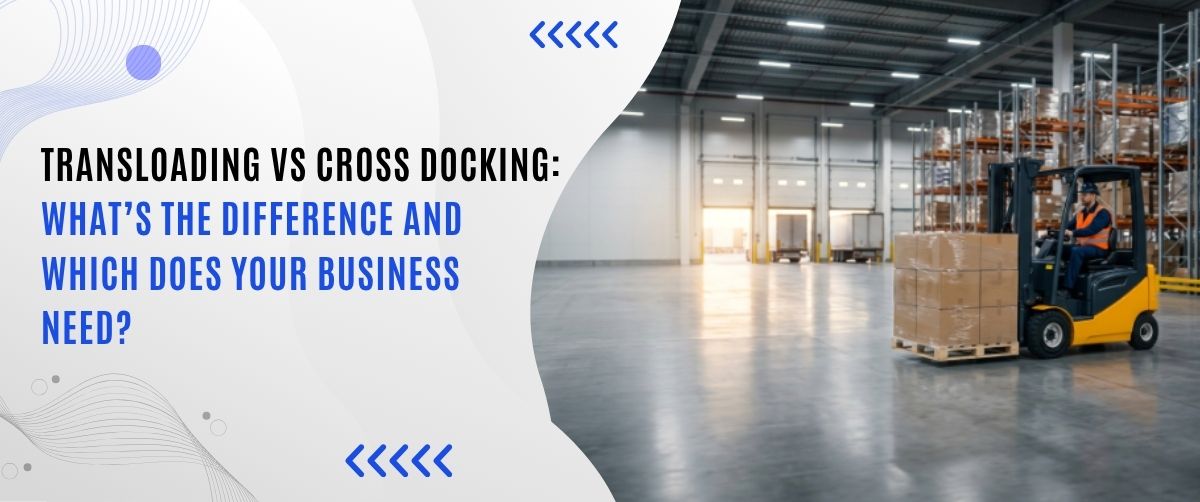
If you move goods through Southern California, you’ve likely heard the terms transloading and cross docking used interchangeably. But they are not the same thing. Choosing the wrong method can add days to your delivery timeline and unnecessary costs to your freight budget. Understanding transloading vs cross docking California is especially critical for importers and freight managers operating near the Long Beach and Los Angeles ports — two of the busiest cargo gateways in North America.
Read More: How a 3PL Warehouse Can Help Your eCommerce Business Grow Faster
What Is Transloading?
Transloading is the process of transferring cargo from one mode of transportation to another. In a typical scenario near the Long Beach Port, imported goods arrive in ocean containers. Those containers are then moved to a 3PL warehouse near the port, where the freight is unloaded, sorted, and reloaded onto domestic trucks, rail cars, or air freight.
This method is widely used when ocean containers cannot be delivered directly to their final destination. It allows businesses to break down large international shipments into smaller, more manageable loads for distribution across the country.
Key Benefits of Transloading
- Converts international container sizes to domestic trailer standards
- Reduces dwell time and port demurrage fees
- Enables cargo consolidation for multiple destinations
- Ideal for high-volume importers managing complex supply chains
What Is Cross Docking?
Cross docking is a logistics strategy where inbound shipments are received at a facility, sorted, and transferred directly to outbound vehicles — with little to no storage time in between. The goal is to keep products moving without letting them sit on a warehouse shelf.
In a cross docking operation, freight from multiple suppliers can be consolidated onto a single truck heading to one destination. Alternatively, a single large shipment can be broken down and routed to multiple delivery points. The defining factor is speed: goods typically spend less than 24 hours at the facility.
Key Benefits of Cross Docking
- Significantly reduces warehousing and storage costs
- Speeds up last-mile delivery timelines
- Minimizes product handling and reduces damage risk
- Works well for time-sensitive or perishable freight
Transloading vs Cross Docking California: Key Differences Explained
Both methods involve moving freight through an intermediate facility, but their purposes differ significantly. Here’s how they compare:
Mode of transport: Transloading always involves a change in transportation mode — ocean container to domestic truck, for example. Cross docking keeps freight on the same transportation type but reroutes it faster.
Storage time: Transloading may involve brief storage while cargo is sorted and repackaged. Cross docking aims for zero to minimal storage.
Use case: Transloading suits importers handling large international shipments. Cross docking suits distributors who need fast, high-volume sorting and re-routing of domestic freight.
Facility requirements: Transloading requires space for unpacking, sorting, and repacking cargo. Cross docking needs a fast-flow layout with synchronized inbound and outbound docks.
Which Method Does Your Business Need?
The right choice depends on your freight type, volume, and supply chain goals. Consider the following scenarios:
Choose Transloading If You:
- Import goods through the Port of Long Beach or Port of Los Angeles
- Need to convert ocean containers to domestic trailers
- Want to avoid costly port demurrage and detention fees
- Need to split one large shipment across multiple distribution points
Choose Cross Docking If You:
- Operate a fast-moving retail or e-commerce supply chain
- Handle time-sensitive or temperature-controlled freight
- Want to eliminate long-term warehousing costs
- Need to consolidate shipments from multiple suppliers quickly
Many supply chain managers near the Long Beach ports benefit from both services — using transloading for inbound international cargo and cross docking to accelerate domestic distribution. Working with an experienced 3PL warehouse partner means you can combine both strategies into one seamless logistics solution.
Partner With a Southern California 3PL That Delivers Both
Making the right decision between transloading vs cross docking California can directly impact your delivery speed, storage costs, and overall supply chain efficiency. At 3PL Platinum, we specialize in both — providing flexible, scalable warehousing and distribution services just minutes from the Long Beach and Los Angeles ports.
Whether you’re an importer managing high-volume ocean freight or a freight manager looking to streamline domestic distribution, our team has the experience and infrastructure to support your goals. Don’t let the wrong logistics method slow down your supply chain.
📦 Contact 3PL Platinum today for a free consultation and find out which solution — transloading, cross docking, or both — is right for your business.